Why are dance workshops important for primary schools? (Top benefits of booking)
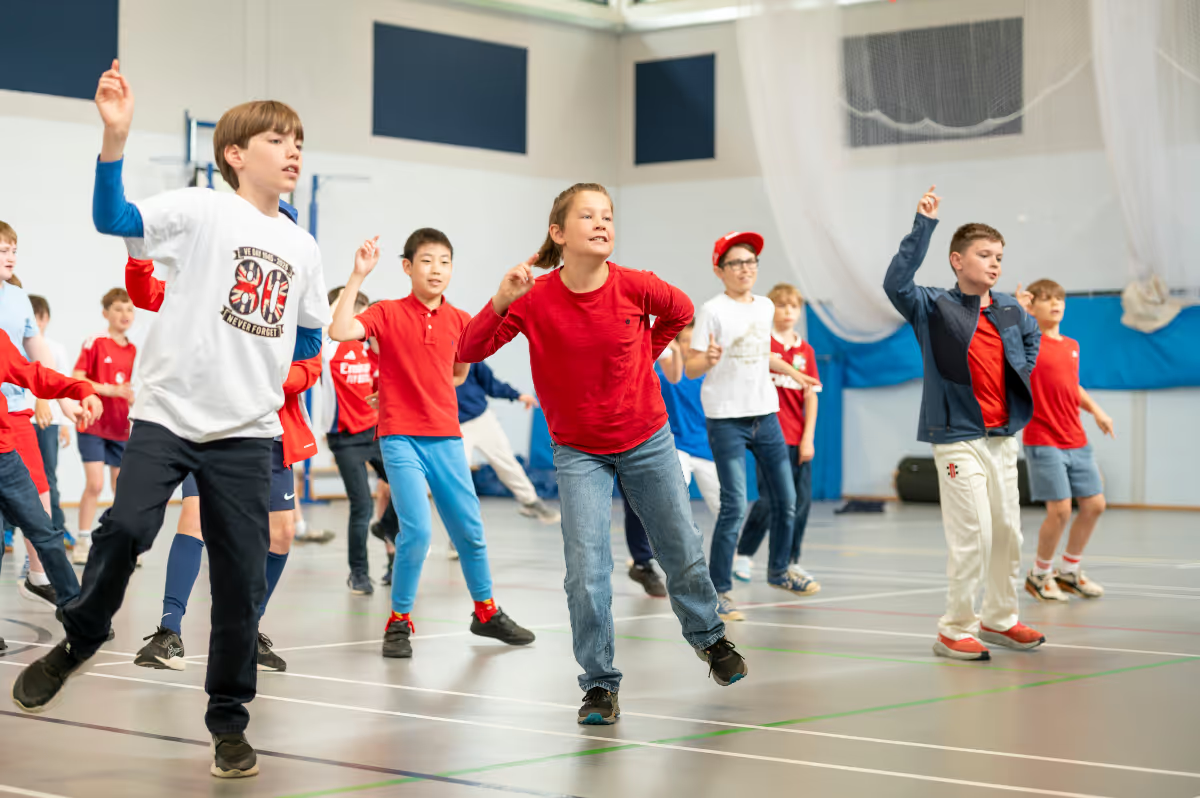
Dance workshops are more than just a fun activity — they play a vital role in enhancing learning, wellbeing, and cultural awareness in UK primary schools. With Ofsted and school leadership teams increasingly focused on pupil wellbeing and curriculum enrichment, booking a dance workshop can help schools meet these goals in a creative, engaging way. Dance Days workshops are designed to support teachers, enrich the curriculum, and give children experiences they will remember for years.
1. Enhanced learning and memory
Research shows that physical activity stimulates brain function, which improves memory, concentration, and learning outcomes. As expert notes, “dancing can actually improve intelligence” (primaryschooldance.co.uk). Similarly, DanceDays highlights that incorporating movement helps children retain new information more effectively.
In practice, this means dance workshops can be integrated into core subjects. For example:
- Maths through movement: pupils create shapes with their bodies or use choreographed steps to practise times tables.
- History through dance: children act out timelines or recreate key historical events through movement.
By making abstract concepts physical, pupils understand and remember them more easily. Schools benefit from stronger learning outcomes and more engaged classrooms.
👉 Related reading: How can dance teach maths, history and other subjects in primary school?
2. Physical health and motor development
Dance workshops also contribute directly to physical education goals. They provide a full-body workout that builds:
- Fitness and stamina
- Balance and coordination
- Gross and fine motor skills
Unlike some traditional PE activities, dance appeals to a wide range of pupils — even those less inclined towards competitive sports. For KS1 and KS2 classes, activities like rhythm drills, partner routines, and choreographed group dances promote cardiovascular health while developing agility and body control.
Teachers can record activity levels or observe improvements in pupils’ movement over time, providing valuable evidence for PE assessments.
3. Wellbeing and mental health
Dance has a proven impact on pupils’ mental health and emotional wellbeing. Movement releases endorphins, helping to reduce anxiety and improve mood. Regular dance “reduces anxiety and depression… improves our mood,” while DanceDays also notes that creative dance supports emotional literacy and self-expression.
In a workshop setting, this translates to pupils:
- Building confidence through performance and group work.
- Expressing emotions safely, which supports emotional regulation.
- Strengthening friendships by cooperating on choreography.
Teachers often see noticeable improvements in class atmosphere after a dance session, with pupils more relaxed, focused, and connected. Dance Days workshops can also support Healthy Week or Wellbeing Week initiatives, giving schools a practical, OFSTED-friendly activity to evidence wellbeing provision.
👉 Related reading: What are five ways dance workshops boost pupils’ wellbeing in primary schools?
4. Curriculum enrichment and inspection-ready evidence
Another key benefit of booking dance workshops is how seamlessly they align with the national curriculum. Dance supports multiple subject areas:
- PE: building physical competence and teamwork.
- Music & Drama: rhythm, performance, and storytelling.
- PSHE / SMSC: empathy, cooperation, and cultural awareness.
- Cross-curricular links: maths, history, and literacy through movement.
Experts argue that dance should have “a more prominent place in the education curriculum” — supporting the case for schools to invest in it. Dance Days provides measurable outcomes schools can show during inspections:
- Pupil work (photos, reflections, videos).
- Teacher observation notes.
By incorporating workshops into the school calendar, leaders can demonstrate curriculum enrichment, inclusion, and pupil wellbeing impact — all areas Ofsted pays attention to.
5. Engagement, motivation and behaviour management
One of the most powerful aspects of dance workshops is how they motivate pupils. Movement-based learning is fun, energetic, and inclusive — meaning even reluctant learners get involved. Teachers often note higher levels of participation in dance sessions compared to other classroom or PE activities.
Benefits include:
- Improved focus: dance activities require listening, timing, and concentration.
- Positive behaviour management: energy is channeled constructively, reducing classroom disruptions.
- Motivation through fun: pupils enjoy learning through music and movement, increasing engagement across the school day.
Real-world example: a themed dance workshop (e.g., “Carnival Dance” or “World Book Day Dance”) can spark excitement and leave pupils talking about the experience long after. This creates positive associations with school events and boosts whole-school morale.
👉 Related reading: School Workshops Events Calendar
6. Cultural inclusivity and diversity education
Dance is also a tool for celebrating diversity and promoting inclusivity. By experiencing different dance traditions, pupils gain a deeper understanding of cultures beyond their own. This not only supports multicultural weeks and international days but also aligns with PSHE and SMSC curriculum goals.
Examples include:
- African dance workshops — linking to Black History Month.
- Indian dance workshops — celebrating Diwali or Holi.
- Irish dance workshops — perfect for St Patrick’s Day.
- Chinese Lion dance — tied to Lunar New Year.
Dance Days highlights that dance is “overwhelmingly inclusive” and supports empathy by letting children step into another culture’s traditions. Dance Days’ international workshops ensure every pupil sees themselves reflected while broadening horizons for the whole class.
👉 Explore: International & Multicultural Dance Workshops
7. How schools can measure impact (practical suggestions)
One common question headteachers ask is: “How do we prove the impact of a dance workshop?” The good news is that dance outcomes can be measured in simple, low-effort ways:
- Pupil voice surveys: ask children how confident, happy, or included they felt before and after the workshop.
- Teacher observations: note improvements in participation, behaviour, or energy levels.
- Engagement logs: track attendance and enthusiasm during dance vs. other subjects.
- Showcase evidence: record videos or photos of final performances to share with parents and inspectors.
Suggested KPIs for schools include confidence scores, engagement rates, and repeat booking uptake. This type of evidence links directly to Ofsted’s focus on wellbeing and inclusion.
8. Typical workshop formats & add-ons (what you can book)
Dance Days offers a flexible range of workshop formats to suit schools of every size:
- Half-day sessions — perfect for smaller schools or specific year groups.
- Full-day workshops — cover the whole school with multiple 30–45 minute sessions.
- Termly packages — bring Dance Days back each term to explore different styles.
All workshops can be adapted for SEND inclusion and tailored to school themes (Healthy Week, Multicultural Week, Curriculum Links). Schools can also combine packages — for example, a multicultural week paired with wellbeing-focused sessions.
9. How to book with Dance Days
Booking a dance workshop is simple. Once you’ve chosen your theme or package, Dance Days provides a quote, a clear timetable, and a booking confirmation. From there, our trained instructors deliver a stress-free, engaging session for your pupils.
Dance Days workshops are run by professional teaching artists who adapt to every school’s needs. Whether you’re aiming for curriculum enrichment, a special event, or pupil wellbeing, we’ll help you design the perfect program.
👉 Contact us today to get your tailored quote or download our one-page benefits summary for school leaders.
Frequently Asked Questions
Can dance workshops help with exam or test stress?
Are dance workshops suitable for SEND pupils?
How long does a typical workshop last?
What evidence can we show inspectors?
Do teachers need to prepare anything before a workshop?
Book Early - Our diary is open until July 2027!

.webp)